


Gum Disease Treatment – Ellicott City, MD
Keep Your Whole Mouth Infection-Free
As important as your teeth are, you can’t ignore your gums if you want to preserve your smile well into your golden years. That’s why we recommend incorporating healthy habits into your daily routine, like flossing, and calling our team at My Ellicott City Dentist at the first sign of sensitive or infected gums. In the meantime, you can read on to learn more about gum disease treatment, including the different types that we offer.
Why Choose My Ellicott City Dentist for Gum Disease Treatment?
- Gum Screening Included with Every Checkup
- Highly Detailed, Efficient Cleanings for Infections
- Laser Technology for Comfortable Treatments
What is Gum Disease?

Gum disease is an oral health condition that roughly 50% of American adults struggle with. It develops whenever an excessive amount of plaque and bacteria has built up on and around the tissue. During the early stages, you might notice some slight redness and swelling. However, if the infection is left alone to progress, it can cause your teeth to come loose and potentially even fall out completely.
Symptoms of Gum Disease
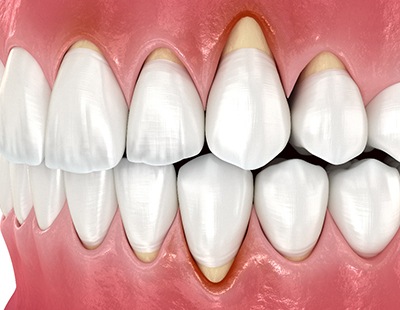
Here are a few common warning signs that you may benefit from gum disease treatment in Ellicott City:
- Your gums are red, swollen, or tender
- Your teeth appear longer than usual (gum recession)
- Your gums bleed when you floss
- You’re dealing with chronic bad breath
- Your teeth feel loose
If these or any other abnormal symptoms arise, don’t wait – schedule an appointment with us right away!
How Do We Treat Gum Disease?

Once we’ve examined your mouth, we’ll discuss your treatment options and share our recommendations on how to best heal your gums. If you are interested in learning more leading up to your visit, feel free to read on!
Scaling & Root Planing
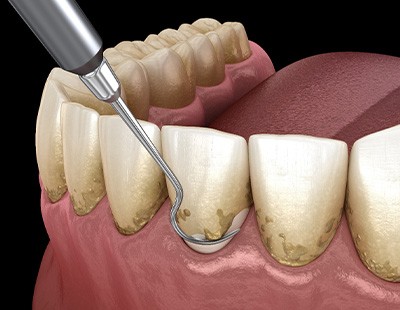
Gum disease is more than just puffy gums that bleed when you brush and floss. It can cause a variety of dangerous side effefts, from persistent, bad breath to receding periodontal tissue and even tooth loss. Scaling and root planing treatment helps combat this harmful condition by removing bacteria and plaque from above and below the gumline, eliminating the infection and allowing the tissue to heal.
Do I Need Scaling & Root Planing?
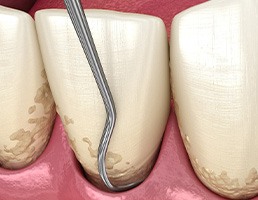
Although the earliest stage of gum disease, gingivitis, can often be prevented from advancing by improving your oral hygiene routine, if your condition has advanced beyond this point, a more intensive intervention may be necessary.
If you are noticing signs of periodontitis including bad breath, gums that bleed when brushed or flossed, swelling or redness, receding gums, or excess plaque buildup, a treatment called scaling and root planing may be the solution.
The Process of Scaling & Root Planing

In most cases, scaling and root planing is performed in two separate dental appointments. During your first visit, we will use a device known as a scaler to remove the plaque buildup from the surface of your teeth, reaching as far down the gingival pockets.
On the second visit, your dental team will eliminate deposits of hardened bacteria from below your gumline, all the way down to the roots of your teeth. This not only eliminates the present infection but allows your healthy gum tissue to reattach to the teeth so it can continue to protect them.
Aftercare Tips for Scaling & Root Planing

Because scaling and root planing can be very in-depth procedure, it may take a few weeks for your mouth to completely recover. During that time, you may notice some sensitivity or discomfort, but rest assured that this is completely normal.
To help ensure that your healing stays on track, be sure to follow these aftercare guidelines as closely as possible:
- After each meal, rinse your mouth with warm saltwater. This will not only soothe your periodontal tissue but also loosen food particles so brushing and flossing is more comfortable. Just mix ¼ teaspoon of salt to each eight ounces of warm water.
- Brush your teeth gently and only use a soft-bristled toothbrush. Scrub your teeth in slow, circular motions to reduce your risk of irritation.
- Stick to a soft diet for the initial 48 hours after each appointment, and avoid any foods and beverages that are hot, spicy, or acidic until your healing is complete.
- Don’t drink alcohol, smoke, or vape until your gums have healed.
- Avoid strenuous physical activity for the first 24 to 48 hours after each appointment, as this can divert the blood flow away from your gums and prolong the healing process.
Antibiotic Treatment
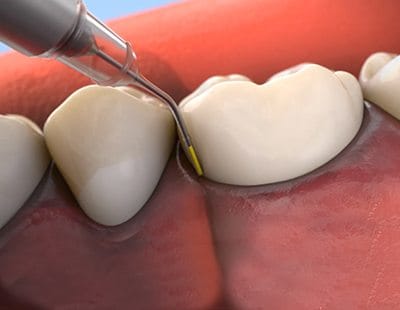
There is a little bit of space between your teeth and gums called periodontal pockets. The bacteria in gum disease tend to gather in these pockets, and it’s hard to get rid of them with regular dental instruments or normal dental hygiene practices. Antibiotic therapy gives us a way to fight bacteria in these hard-to-reach spaces over an extended period of time. Once the medicine is in place, it will slowly dissolve into the pockets, giving it a chance to eliminate bacteria no matter where it is hiding.